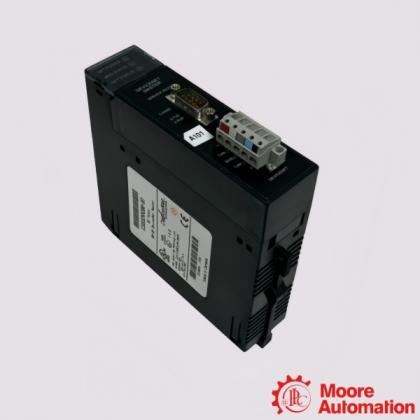
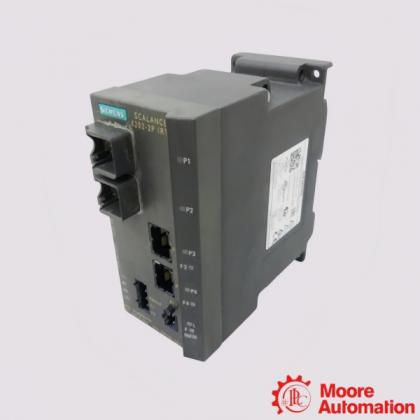
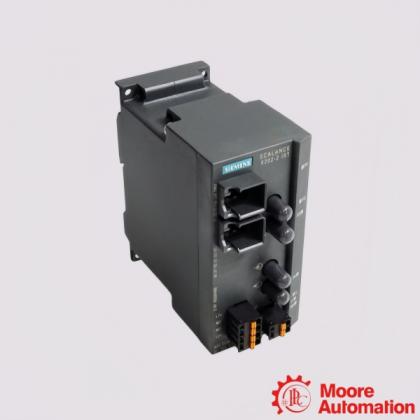
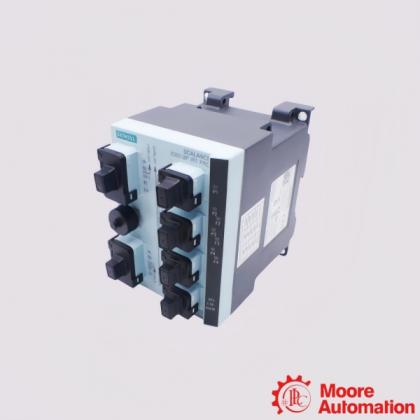
1 yıl garanti


INDUSTRY ANALYSIS / NOVEMBER 13, 2026
THE ENGINEERING QUESTION
Useful production data.
A control task that stays the priority.
Siemens announced on October 21, 2026 that it is collaborating with NVIDIA on AI-supported printed circuit board inspection, combining industrial software, digital twins and NVIDIA Cosmos. The project is being demonstrated at Siemens’ Electronics Factory Erlangen. It addresses inspection preparation and verification; it is not an announcement of new AI functionality for SIMATIC S7-300 controllers.
For manufacturers operating S7-300-controlled equipment, the announcement provides a timely context for a more immediate engineering question: how can useful production data be collected without compromising the control task? Siemens’ published gateway example and CPU documentation provide concrete reference points. They also show why a successful connection alone is insufficient evidence that a retrofit is ready for production.
01 / ENGINEERING CONTEXT
A gateway route, not universal compatibility
Siemens’ application example SIMATIC CloudConnect 7 as an OPC UA gateway, version 3.0 dated April 2024, documents S7 communication over Ethernet and, with CC716, PROFIBUS/MPI. Its example connects an S7-300 CPU through PROFIBUS and exposes data through the gateway’s OPC UA server.
This is evidence of an integration route, rather than universal compatibility or a guarantee of current hardware availability. It does not turn the CPU itself into an OPC UA server. An existing installation must be checked against the selected gateway’s supported interfaces, firmware, connection requirements and security configuration.
02 / ENGINEERING CONTEXT
Read-only collection still uses resources
The Siemens CPU 31xC and CPU 31x: Technical specifications manual explains that operating-system communication processing can extend the main-program cycle. Section 6.2.4 describes the relationship between configured communication load and cycle-time extension. Its calculation is a planning reference, not a measurement of the effect a particular collector will have on a working machine.
Consequently, restricting an analytics client to reads does not eliminate communication work. A retrofit assessment should account for existing HMI and engineering connections as well as the proposed collector. Increasing polling frequency or adding clients should follow measured results, rather than an assumption that every controller has spare capacity.
03 / ENGINEERING CONTEXT
Four priorities for a controlled retrofit
The following are practical engineering recommendations drawn from these constraints, rather than Siemens performance guarantees:
-
1
Record the installed configuration.
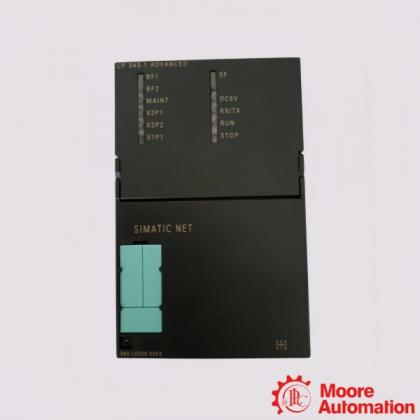
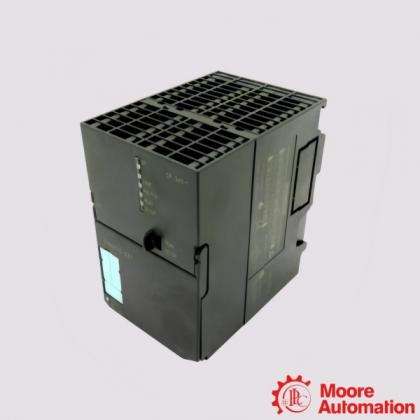
Capture the complete CPU and communication-module order numbers, hardware and firmware versions, network topology and available project backup. Confirm the actual data path before purchasing a gateway.
-
2
Define one production question.
For downtime analysis, start with machine state, alarm identifiers and production counters where those signals exist. Record each tag’s address, data type, unit and meaning. An alarm bit alone does not establish the root cause of a stop.
-
3
Set sampling around the event.
Choose refresh rates to suit the process and test the resulting load. A brief state change can be missed between polls; event capture or counters may be needed. No single sampling interval is appropriate for every S7-300 installation.
-
4
Compare operation before and after connection.
Record baseline cycle times, diagnostics and HMI response. During a controlled trial, check data completeness, stale values, reconnect behavior and the same operating measures. Agree acceptance limits and a rollback method before release.
04 / ENGINEERING CONTEXT
Make the data trustworthy
For an initial monitoring project, use read-only permissions where supported, limit accessible tags and keep analytics writes outside the approved scope. Siemens’ gateway documentation calls for appropriate protection, including firewalls or network segmentation, when connecting plant systems to enterprise networks or the internet.
For trustworthy analysis, the commissioning record should also distinguish source-event time from collector-receipt time, identify communication gaps and define how counters reset. Otherwise, a communications interruption may be misclassified as a machine stop, or a reset may distort production totals.
The immediate opportunity for an S7-300 retrofit is therefore a verified dataset for a defined task, such as a downtime record or production report. Any later AI proposal needs its own validation against that task. The recent Siemens announcement establishes the industry context; the installed controller, network and measured operating results determine what an individual factory can implement.
FROM NEWS TO YOUR APPLICATION
Make your next discussion more useful.
EXPLORE YOUR REQUIREMENTS
Start with a production question
Open a topic to see which data you need to prepare.
Machine status & downtime
Identify the existing run, stop and fault signals. Define planned stops separately from faults and verify how short events are captured. A sampled stop state alone does not identify the root cause.
Alarm history
Prepare alarm identifiers, descriptions and reset rules. Check whether timestamps originate in the controller, HMI or collector, and distinguish an active alarm from an acknowledged one.
Production counts
Identify the count source, unit and reset or rollover behavior. Define the reporting period and distinguish total units from accepted units where those signals are available.
Process parameters
List the required tags, engineering units, scaling and useful refresh rates. Confirm that the required measurements exist; a gateway does not create sensor data that the machine does not provide.
YOUR PREPARATION CHECK
What is ready, and what needs checking?
Tick the information you already have before discussing a connection plan.
This checklist is a planning aid, not a compatibility approval. Selections are temporary and are not submitted.
QUESTIONS FROM THE FACTORY FLOOR
Before you connect
Does read-only collection affect PLC operation?
Read-only requests still require communication processing. Compare cycle times, diagnostics and HMI response before and during a controlled trial. Read-only access does not mean zero load.
Do I have to replace the CPU first?
Not necessarily. A supported gateway route may be possible with the installed interfaces and configuration. Verify the exact hardware, firmware and connection requirements before deciding whether to retain or replace equipment.
Is a faster polling rate always better?
No. Match sampling to the event duration and reporting purpose, then measure load and data completeness. Short events may require event capture or counters rather than simply faster polling.
Can an AI tool determine the cause of every stop?
No. A stop bit or alarm record may show when an event occurred without proving its cause. Reliable analysis requires process context, verified timestamps and appropriate validation.
YOUR NEXT STEP
Choose the right assessment path
I want to collect production data
Start with a defined reporting question and a small, verified tag list. Check the available communication route, establish baseline operation and agree trial acceptance criteria.
I need to investigate a communication problem
Record the fault time, diagnostics and affected connections. Compare behavior under normal operation and collection load. Follow the plant’s approved troubleshooting procedure before making changes.
I am considering a control-system upgrade
Inventory program, I/O, communications and HMI dependencies. Compare continued maintenance with staged or full migration, including the available maintenance window and a tested recovery plan.
Discuss your next step with us:
S7-300 APPLICATION DISCUSSION
Bring your equipment details.
Start a focused conversation.
Prepare your CPU and communication-module details, acquisition goals and available maintenance window.