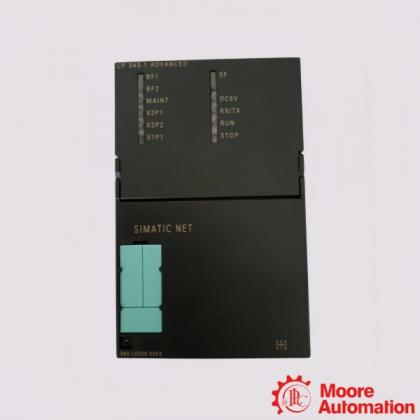
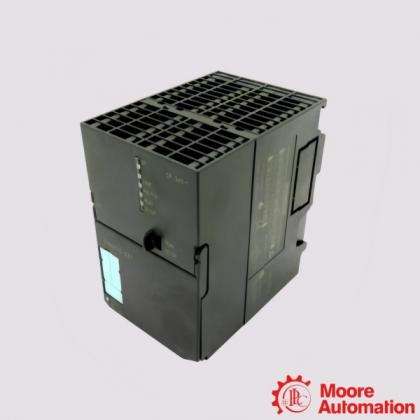
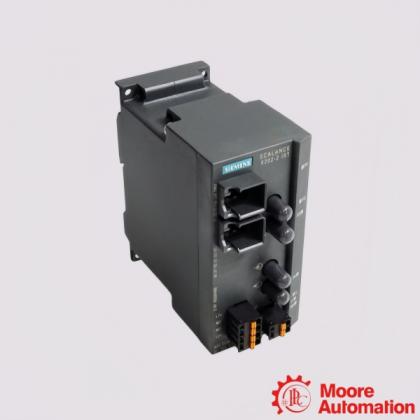
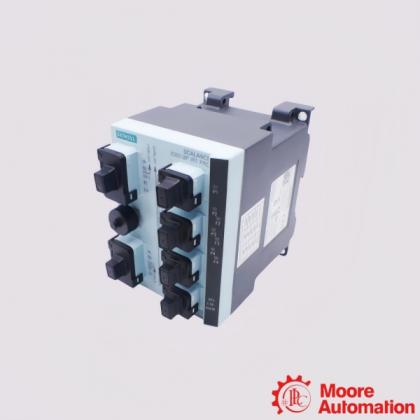
1 yıl garanti


THE RELIABILITY FIELD JOURNAL / 19 NOV 2026
3701/60
BENTLY NEVADA · WIND TURBINE MONITORING
An alarm starts the investigation.
Evidence prepares the maintenance.
A closer look at operating context, diagnostic confidence and the information needed before a spare-parts order or maintenance intervention.
Baker Hughes announced Cordant Release 26.1 on January 28, 2026, combining asset strategy, health insights and AI-driven risk intelligence. The release provides a current-year industry backdrop for a familiar maintenance problem: an operator receives an alert, but the information needed to explain it is scattered across monitoring software, turbine records and maintenance files.
For owners of existing Bently Nevada 3701/60 installations, the immediate opportunity is to improve the quality of that handover. An alarm notification should lead to a traceable assessment and a prepared work package. It should not become a shortcut from a changing vibration value to an assumed gearbox failure or an unverified replacement order.
The Cordant announcement is a software-platform development, not evidence of new AI functionality or automatic upgrade compatibility for a specific 3701/60 unit. The practical recommendations below concern review discipline, data preparation and equipment identification. Actual functions depend on the installed hardware, software, configuration and supporting documentation.
THE OPERATING REALITY
Compare the machine with itself—under comparable conditions
A historical Bently Nevada case study in ORBIT, Volume 30, No. 1 (2010), describes the 3701/60 in an ADAPT.wind installation with a central farm server. It explains that changing turbine speed shifts bearing and gearbox fault frequencies, while changes in power and torque can influence vibration amplitude. The application used operating modes to support more meaningful comparisons. These details describe that published application, not every installed system.
A useful site review begins by asking what the turbine was doing at the event time. Was it holding a stable production state, changing power, accelerating or approaching shutdown? Preserve the available speed, power and state records with the alarm. If those records are absent, identify the gap rather than silently assuming a steady operating condition.
Then select a baseline that answers the same question. Comparing a newly loaded machine with an earlier low-load reading may reveal an operating difference rather than degradation. Conversely, a recurring increase under similar conditions deserves investigation even if a broad overall trend appears modest. Keep the basis of comparison visible in the assessment.
The first question is not simply “How high is the reading?”
It is “What changed, under which conditions?”
MEASUREMENT INTEGRITY
Check the record before interpreting the mechanism
Separate a machine-condition concern from a measurement-chain concern early. Confirm the turbine, component, measurement point and channel identity. Review recent sensor replacement, remounting, cable work or configuration changes. A discontinuity that begins immediately after maintenance needs a different investigation from a gradual change across otherwise comparable operating periods.
Check the available sensor-health information and acquisition status. Record gaps, intermittent communication and any invalid-quality indication. A missing value is not a zero-vibration measurement, and the time a server receives a record may differ from the time the event occurred. Verify the timestamp convention used in the installation before correlating multiple sources.
Also preserve the meaning of the displayed value. Units, scaling, measurement type and acquisition settings belong with the record. A screenshot without this context may be difficult for another engineer to reproduce. If settings changed, document the change and avoid presenting the resulting trend break as confirmed mechanical deterioration.
THE DIAGNOSTIC DOSSIER
Five records that strengthen an alarm review
Bently Nevada’s published System 1 Use Case: Complex Gearbox Monitoring discusses speed references, load correlation, gearbox properties and state-based analysis. Its discussion supports reviewing information in context; it does not establish that every analytic is available on an individual 3701/60 installation. The following dossier is a practical framework for assembling available evidence.
EVIDENCE FILE A
Operating context
Build an event context record using the available speed, power, operating state and relevant control-system events. Note the source and timestamp of each record. Keep a comparable baseline beside the event so the reviewer can see what changed without reconstructing the operating history from separate screenshots.
Interpretation limit: A correlation with load or a state transition does not prove that the machine is healthy or faulty. It defines the conditions that must be considered.
EVIDENCE FILE B
Trend history
Review the direction, recurrence and persistence of the change. State whether the observation appears at one point or several, and whether it survives a comparison made under similar conditions. Retain the underlying records where possible so a second reviewer can check the conclusion.
Interpretation limit: A persistent trend supports further investigation but does not, on its own, identify a damaged bearing or gear.
EVIDENCE FILE C
Time waveform
Where available, examine the time record for repeatable features and changes in signal shape. Retain the sample settings with the waveform and check that the record is suitable for the question being asked. An apparently dramatic shape should prompt a signal-quality check as well as a mechanical hypothesis.
Interpretation limit: Clipping, intermittent connections or changed acquisition conditions can affect the record. A waveform needs interpretation alongside operating context.
EVIDENCE FILE D
Spectrum and envelope spectrum
Use the available frequency-domain views to explore a specific hypothesis. Relate the interpretation to a verified speed reference and the actual machine configuration. Record which component information is confirmed, which is assumed and which still requires verification before assigning a fault location.
Interpretation limit: A peak, harmonic or sideband is a clue. Its presence alone does not establish damage severity, remaining life or the correct maintenance action.
EVIDENCE FILE E
Independent observations
Gather relevant temperature, lubrication, oil-condition and inspection information when available. Include recent repairs or operating events that may explain a change. Look for observations that support the hypothesis and observations that challenge it, rather than selecting only the records that fit an early conclusion.
Interpretation limit: Evidence sources may have different timestamps, sensitivities and coverage. Disagreement should be investigated; it should not be hidden in the final recommendation.
INTERPRETATION IN PRACTICE
Two situations, two different investigations
The following examples are illustrative review situations, not reported customer cases or performance claims. They show how the same initial label—“high vibration”—can lead to different information requests. Neither example establishes an operating or shutdown rule.
Situation A / An increase during a power transition
Begin with the sequence of operating events. Compare the observation with previous transitions and check whether the same measurement returns to a comparable baseline in a stable state. Confirm that the event record is complete and that the relevant alarm configuration is understood. The review may still identify a mechanical concern, but the transition should not disappear from the explanation.
The useful handover is an event comparison with the unresolved questions clearly stated—not an unsupported claim that every transition-related alarm is harmless.
Situation B / A repeatable change at comparable load
Check whether the change is reproducible and whether it appears in additional measurement views or related points. Review the available dynamic records and component data, then seek a focused corroborating check. A consistent observation can strengthen the case for investigation without proving the exact damaged part.
The useful handover identifies the suspected area, the evidence supporting it, the alternatives still open and the inspection required to resolve them. It does not convert a trend into a precise failure date.
FROM ANALYSIS TO ACTION
Write the recommendation so another person can execute it
An alarm assessment should separate observation, interpretation and proposed action. “The value increased” is an observation. “A particular defect may explain the change” is an interpretation. “Obtain a specific inspection or additional measurement” is an action. Mixing these statements makes uncertainty harder to see and can send a maintenance team toward a part that has not been shown to be at fault.
Assign an owner and a review point. State what new evidence would strengthen, weaken or change the recommendation. If the available information is insufficient, make the additional data request specific: which point, which operating condition, which record and which supporting machine information are needed? A request to “collect more data” leaves the next technician with too much ambiguity.
Condition-monitoring interpretation must remain aligned with the turbine manufacturer’s requirements and the site’s operating procedures. This article does not supply alarm setpoints, shutdown thresholds or restart approval criteria. Reviewers should not change protection behavior simply to make a diagnostic display quieter.
THE PROCUREMENT HANDOVER
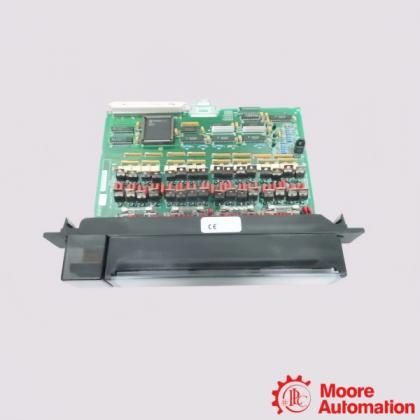
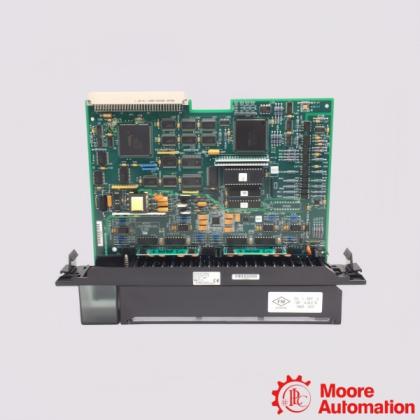
177896-02: identify the installed item before selecting a spare
For a spare-parts enquiry carrying the reference 3701/60 / 177896-02, start with the installed item’s nameplate and assembly information. The specific function, revision and replacement relationship must be confirmed against applicable manufacturer documentation. The reference is used here as an identification check, not as a claim that a particular component has been verified as interchangeable.
Request clear photographs of the complete label and relevant assembly, rather than a cropped part-number fragment. Record the hardware revision and installed firmware where available. Preserve the monitoring-software version and the configuration that the replacement must support. A matching family name or a physically similar housing does not complete this review.
Keep three evidence sets together: the equipment identity, the site configuration and the proposed spare’s supplied condition and documentation. Identify connected terminal assemblies, cables and sensors. Confirm the scope of the purchase—component, assembly or other included items—so procurement and maintenance do not work from different assumptions.
The maintenance window should not be the first time someone asks where the configuration backup is stored. Verify that the backup is readable and associated with the correct installation. Define who can restore it, which records must be preserved and how the previous configuration will be recovered if the replacement does not pass the agreed checks.
THE MAINTENANCE WORKSHEET
What the handover should contain
WORK PACKAGE / PREPARATION RECORD
Turbine and component, measurement point, event timestamp, operating state, alarm value and units, and the location of supporting files.
Baseline selection, measurement-quality findings, the principal hypothesis, conflicting observations and the information still missing.
The approved inspection or replacement scope, responsible personnel, required tools and parts, and the equipment documentation to use.
Configuration backup identity, channel map, relevant communication settings and the person responsible for restoration.
Agreed channel, reading, communication and alarm checks; results, unresolved discrepancies and the responsible sign-off.
After work, a component appearing on the network is only one observation. Verify the intended channel assignments and the relevant readings, record what configuration was restored and review the agreed communication and alarm checks. Where applicable, confirm that the history remains interpretable across the intervention rather than assuming the old and new data can be compared without qualification.
THE CUSTOMER OUTCOME
A shorter path from uncertainty to a prepared intervention
The operational aim is to reduce avoidable back-and-forth: a technician asking which point triggered the alarm, an analyst asking for the missing speed record, or a buyer asking whether the quotation includes the required assembly. A common evidence package makes those questions visible earlier. It cannot guarantee that a fault will be predicted or that an outage will be avoided.
For 3701/60 users, credible predictive maintenance begins with traceable records and disciplined interpretation. The strongest maintenance preparation links the event, the supporting evidence, the equipment identity and the post-work checks. That connection is what turns an alert into a useful engineering conversation.
EQUIPMENT & SPARE-PARTS ENQUIRIES
Start with the nameplate.
Bring the configuration context.
Contact Moore Automation with the complete installed reference, revision information, required quantity and procurement scope.
WhatsApp ↗ +86 18030235313Email → [email protected]Telephone → +86 18030235313